
The Create & Cultivate 2026 Discourse: Scaling Pains, 'Fyre Fest' Hyperbole, and the Search for Real Substance
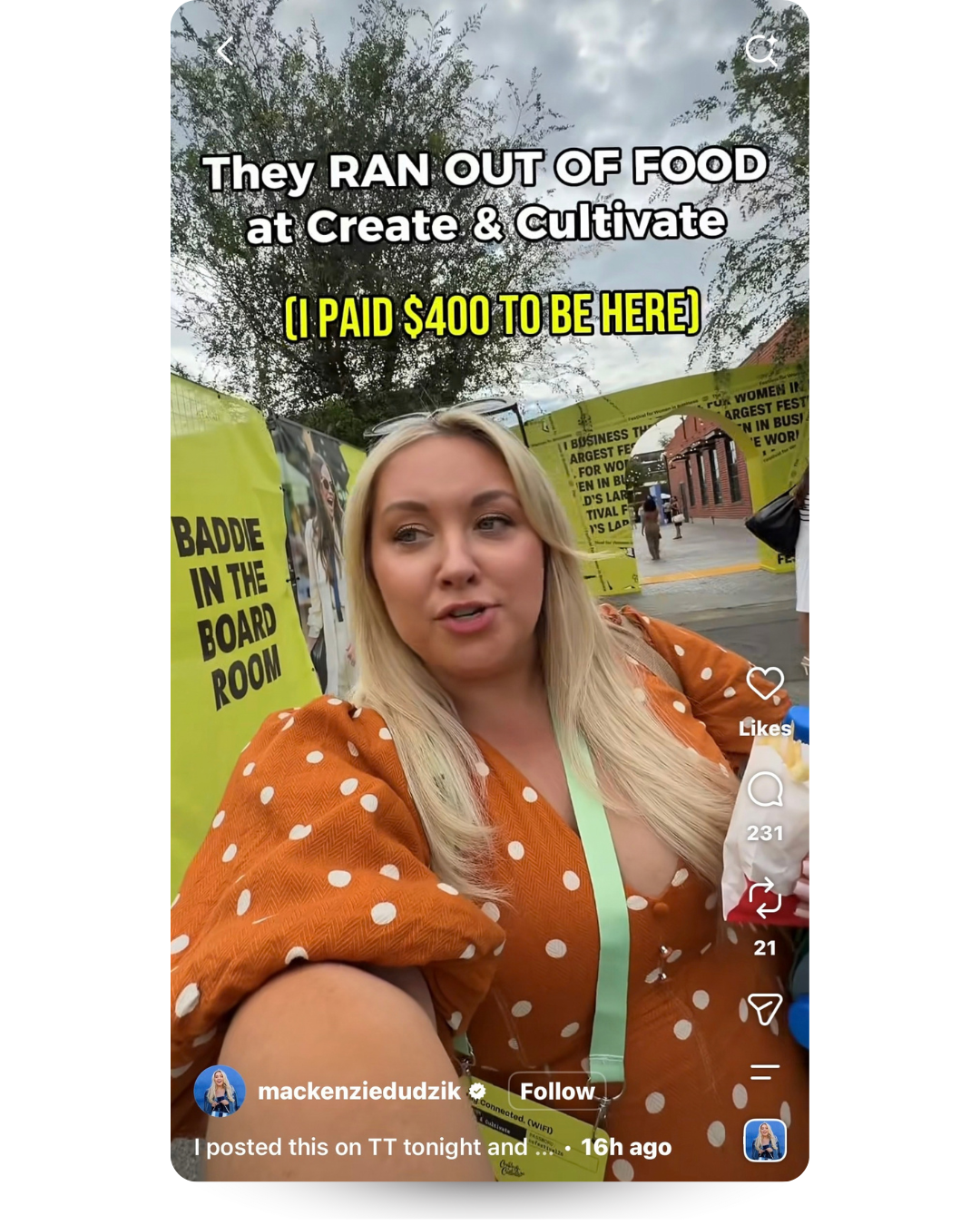
Instagram User @mackenziedudzic shares her experience at Create & Cultivate Festival 2026
If you spent any time scrolling through Threads or TikTok over the past 48 hours, you likely witnessed the digital wildfire surrounding the 2026 Create & Cultivate Festival.
The flagship LA conference, hosted by founder Jaclyn Johnson and CEO Marina Middleton, made a massive leap this year, doubling its capacity to welcome over 4,000 attendees, 150+ speakers, and headline star power including Cardi B, Emma Grede, and Alix Earle.
However, as the gates closed at Rolling Greens, social media opened wide with a torrent of conflicting reviews, viral video deep-dives, and fiery debate. On one side of the timeline, attendees aired grievances over scorching sun, long AF lines, food shortages, maxed-out stage capacities, and muffled audio.
On the other side, defenders and brand partners praised the high-octane networking, lavish VIP gift bags, and celebrity panels, dismissing critics as "clout chasers" or bad-faith haters.
I think the most insane thing, was it’s comparison to Fyre Festival… and so, a much more important discussion emerges. What happens when a beloved community brand scales up for sponsor dollars at the expense of attendee comfort? And where do female entrepreneurs actually go to find genuine, actionable substance?
Mmmm… first,
let’s talk about how DRAMATIC this whole Fyre Fest comparison is.
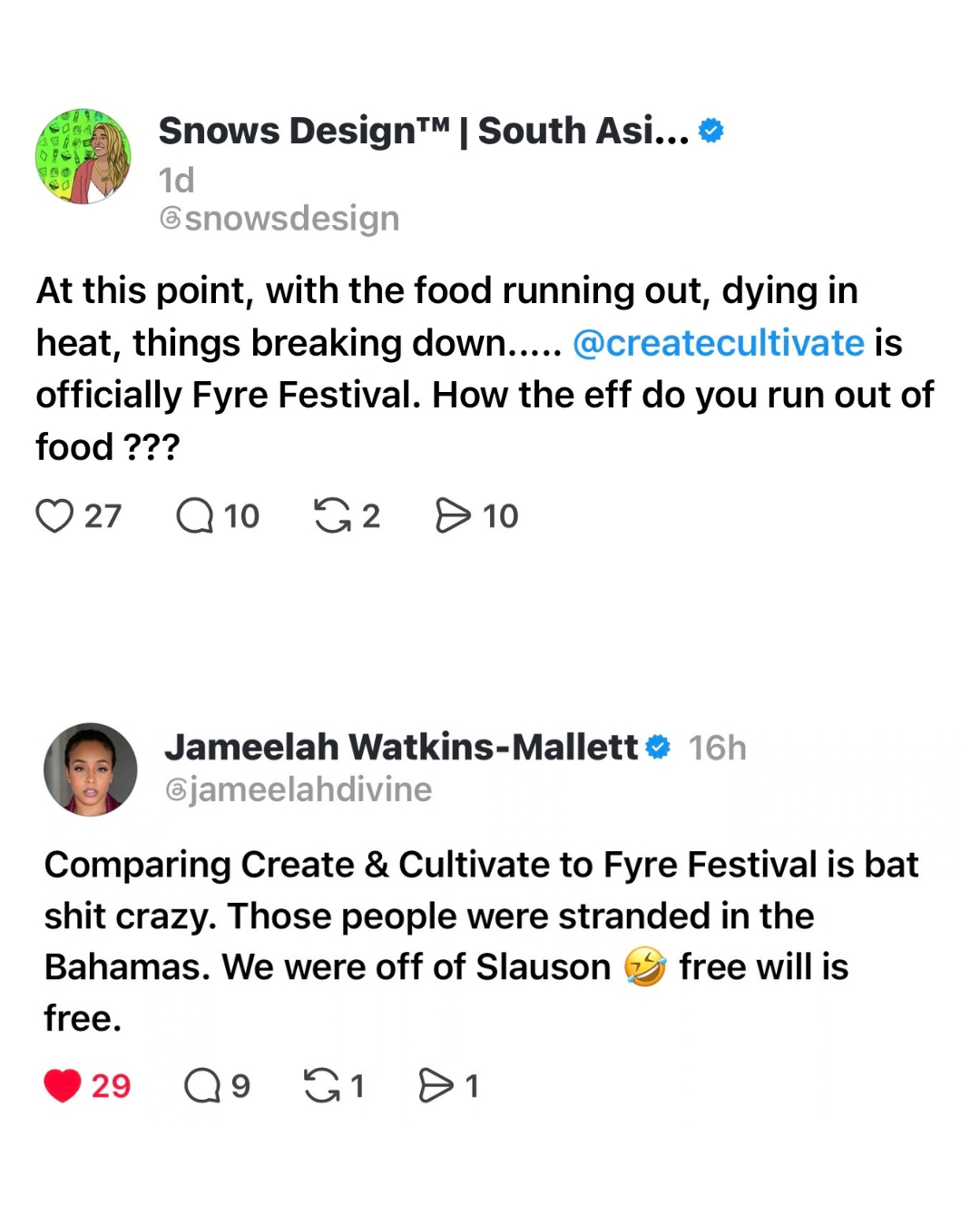
Whenever a high-profile event hits a logistical speedbump, social media immediately reaches for its favorite buzzword: Fyre Festival. I definitely think comparing Create & Cultivate 2026 to Billy McFarland’s fraudulent disaster is a massive reach.
Create & Cultivate was not a phantom scam in the Bahamas. It was a fully realized, heavily produced event featuring top-tier talent, polished aesthetic activations, and functioning tech platforms like its CONNECT networking app. Calling it "Fyre Fest 2.0" ignores the reality of live event production.
Yet, dismissing attendee complaints as simple "internet drama" is equally unfair. When ticket prices range from $400 to well over $700 (with VIP tiers and special networking dinners pushing into four figures), attendees aren't just buying a ticket, but investing significant capital and professional time (IN THIS ECONOMY!).
Swoogo's Event Industry Benchmark report notes that 40% of event organizers identify operational breakdown and wasted budget as the top risks to event ROI, proving that rapid scaling without operational expansion directly undermines long-term brand equity.
Scaling an event from 2,000 attendees to 4,000+ is not simply a matter of selling twice as many tickets, it requires exponentially larger infrastructure, catering reserves, and traffic management.
According to posts across Threads and Reddit forums like r/Femalefounders, several core operational breakdown points consistently ruined the experience for general attendees:
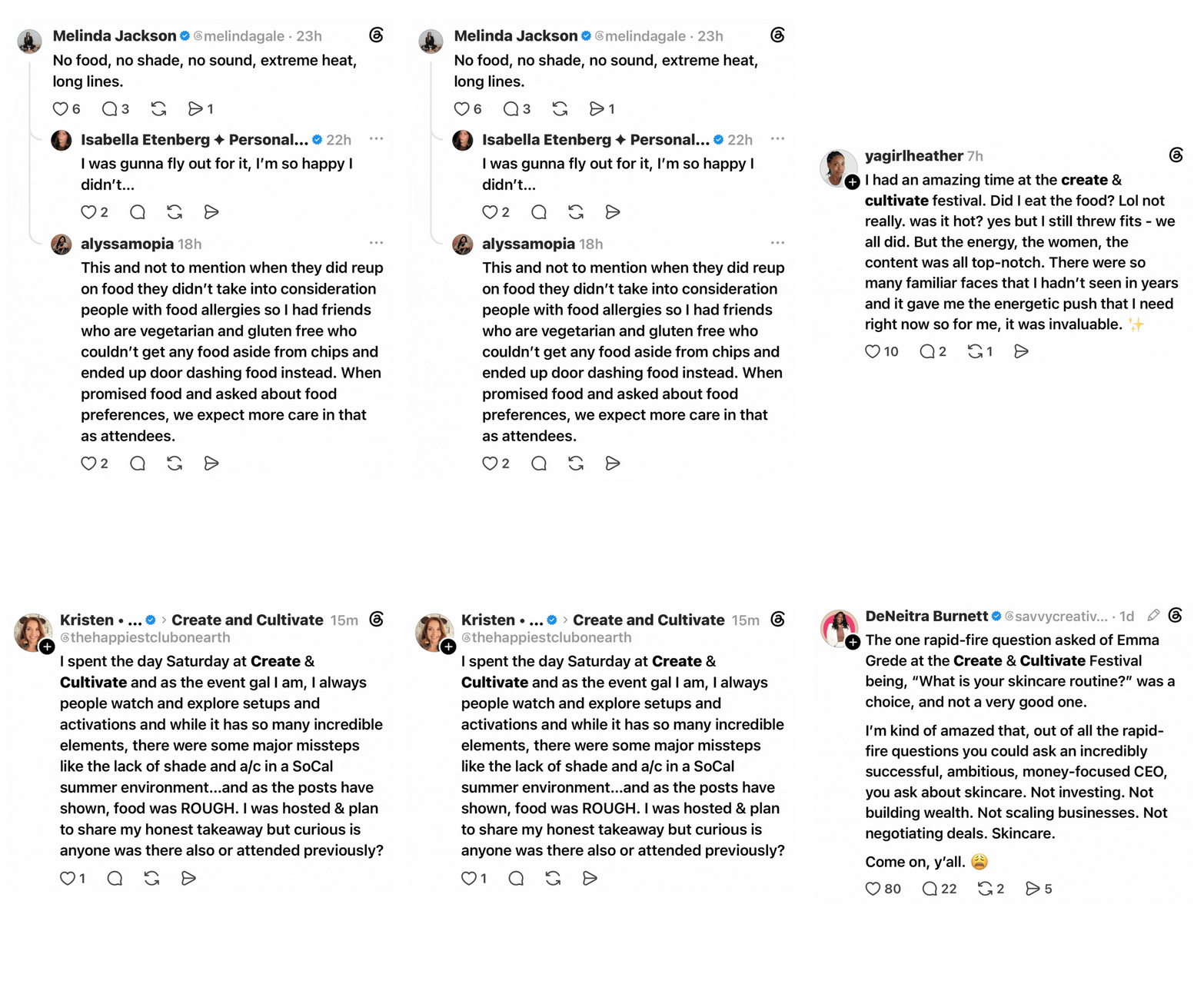
Threads users discourse on the Create Cultivate 2026 Festival in Los Angeles, CA.
The Heat and Shade Deficit:
Held outdoors in mid-September, the venue lacked adequate shade structures or outdoor cooling units for thousands of people waiting between panels. I feel like, THEY HAVE TO KNOW that lines are going to be long. People complained they were long if I’m not mistaken, at their event prior. Not curating cool shade structures (that could even double as content opportunities for photos would be a win-win!) seems like a missed opportunity.
Catering and Food Shortages:
Attendees reported that morning offerings were minimal, a protein ball or small yogurt, and midday food lines quickly ran out. Multiple attendees resorted to ordering UberEats or Postmates directly to the venue gates or walking away to get fast food. Another missed opportunity… could brought in women owned food trucks or something… no?
Stage Overcrowding and Audio Muting:
With 150+ speakers split across four main stages, popular sessions reached capacity long before starting times. Attendees reportedly stood in the back and reported severe audio glitches and low speaker volume, making it almost impossible to hear the panels they had specifically paid to see.
The VIP Disconnect:
Even VIP ticket holders reported standing in entry queues for hours and struggling to access food or seating, leading many to question the true ROI of higher-tier passes.
Let’s look at who this Conference Built For?
Beyond the physical discomfort, a deeper narrative dominated the discourse on Reddit and Threads: the tension between influencer celebrity "clout" and genuine business strategy.
In its early years, Create & Cultivate built its brand as a launchpad for grass-roots female founders, offering intimate workshops on business fundamentals, pitch deck strategy, and operational scaling. But as live events grow larger, the business model shifts. To cover massive venue costs and secure multi-million-dollar corporate sponsorships, organizers often pivot toward star-studded keynotes.
While seeing Cardi B or mega-influencers like Alix Earle on stage brings undeniable glamour and press coverage, many working entrepreneurs left feeling alienated…
Hearing success stories from celebrities or founders with access to massive generational wealth or venture backing offers entertainment, but minimal tactical value for a solo founder trying to scale a bootstrapped e-commerce brand.
As one r/Femalefounders user noted, many panel sessions catered to entry-level surface tips rather than deep-dive execution.
When conferences become giant background sets for brand activations and social media photo ops, paying attendees start to feel like extra props in a corporate commercial rather than valued community members.
Toxic Positivity vs. Consumer Rights
Perhaps the most fascinating aspect of the Create & Cultivate 2026 aftermath is the battle over how feedback should be given.
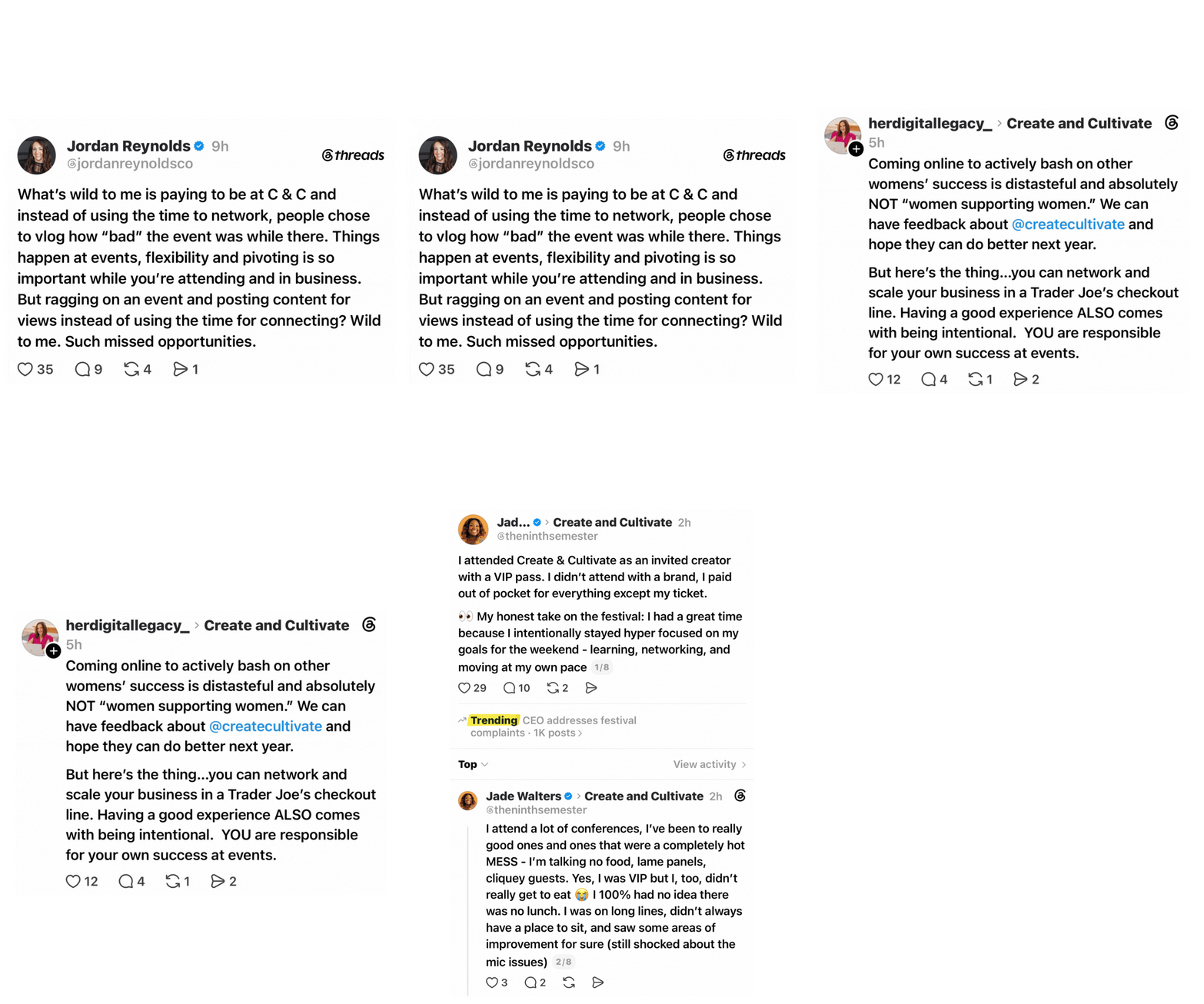
On Threads, several users and defenders scolded critical attendees, claiming that publicly complaining about a female-founded conference was "anti-woman" or bad etiquette. They argued that feedback should only be delivered privately via email or survey forms.
This argument creates a false narrative. Female-led businesses deserve fair evaluation, not patronizing immunity from criticism. Holding event organizers accountable when basic event standards fail is not "hating"—it is protecting consumer standards.
You can have the best education, speakers, content, and client portals, but none of that matters if your people don't feel taken care of, supported, and valued as individuals. People remember how you made them feel.
Fortunately, leaders within the organization, including CEO Marina Middleton, took to social media to post response videos, acknowledging the operational issues and promising to address attendee feedback directly. Constructive dialogue from both sides is the only way the event industry can evolve. As a business owner, you have to be willing to take criticism, no matter how negative, devastating or triggering.
All this discourse serves as a case study for the entire creator and business conference ecosystem. Moving forward, both organizers and attendees can learn valuable lessons.
For Event Organizers:
Infrastructure Before Optics:
Never double headcount without doubling shade, water stations, food vendors, seating, and audio coverage. Aesthetic photo-ops mean nothing if attendees are experiencing heat exhaustion… and don’t forget that these amentities can be sponsored stations and opportunities for brand exposure.
Balance Celebrity with Actionability:
Pair mega-star keynotes with up and comers. Platforming everyday hardworking women entreprenerus could truly be such a gem changing experience for their brand awareness— and in this case, it would’ve paid homage to Create and Cultivates heritage.
Respect the VIP Promise:
If you charge $700–$1,000+ for VIP, ensure dedicated fast-track entry, guaranteed stage seating, and private catering that actually delivers.
For Business Owners & Attendees:
Audit Event Objectives:
Before spending $500+ on a festival ticket, decide what you need. If you want high-energy inspiration, photo-ops, and broad networking, large festivals work. If you need deep domain knowledge or buyer introductions, smaller niche summits or masterminds yield higher ROI.
Leverage Digital Tools Early:
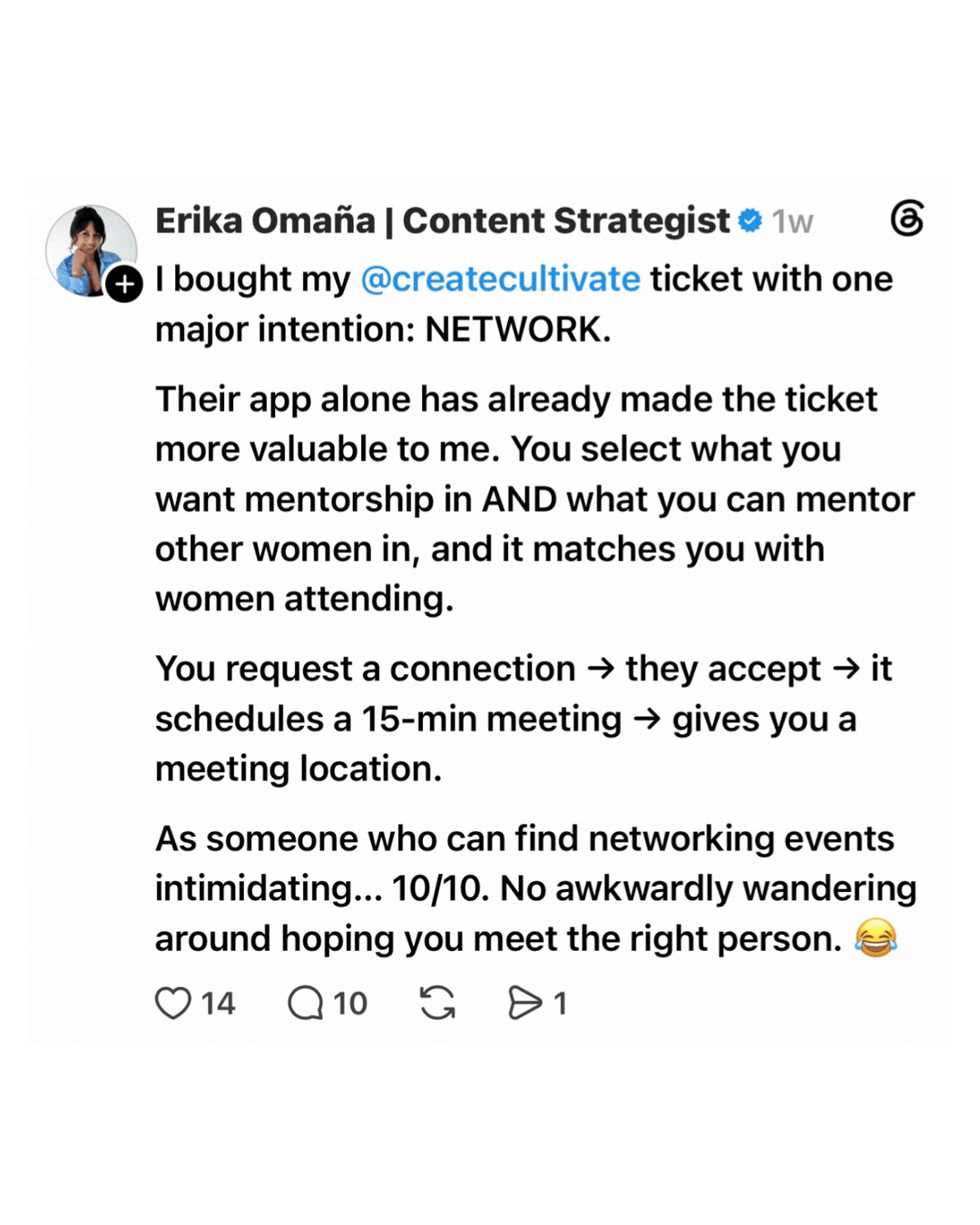
As many attendees noted, using the conference app to book 1-on-1 meetings prior to the event was the single best way to maximize return on investment.
Speak Up Constructively:
Share detailed, honest feedback on post-event surveys and social platforms. Constructive criticism helps future attendees make informed decisions and forces brands to raise their standards.
Did you attend Create & Cultivate 2026 or follow the online discourse and where do you stand on the balance between celebrity keynotes and grassroots business strategy?